
Paying to Pay Your Payment? Let's Talk About the UPI Merchant Charge
The 0.4% UPI merchant fee has social media in a spin. Who actually pays it, who collects it, and why sending people back to cash would be an own goal for Digital India.
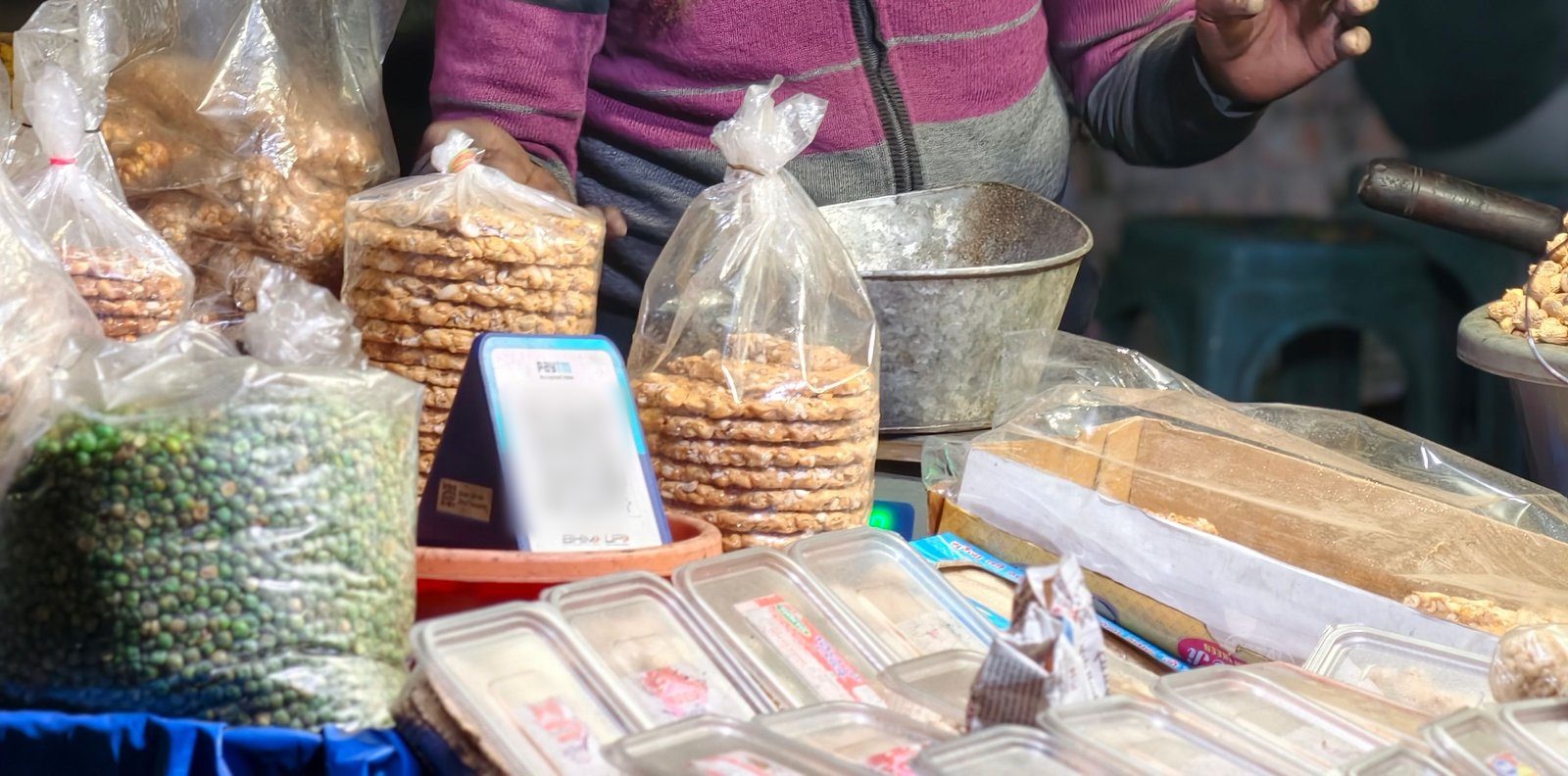
The humble QR code: India's favourite cashier. (QR code blurred.) Photo: Sheikh Abdul Basit on Pexels, Pexels Licence.
Pull up a chair. If your family WhatsApp group is anything like mine, you have already been told that UPI is "no longer free", that your morning chai now comes with a service charge, and that the uncle who still carries a wallet thick enough to stop a door was right all along.
Let's slow down and look at what has actually been announced, what hasn't, and why the debate still matters.
So, what is this 0.4% everyone is talking about?
In September 2026, the UPI Steering Committee, headed by NPCI, fixed a Merchant Discount Rate (MDR) of 0.4% on person-to-merchant (P2M) UPI payments above ₹2,000. In plain words:
- You, the customer, pay nothing extra. The official FAQs say clearly that consumers are not charged, that UPI apps can't add a "platform fee", and that merchants are not allowed to pass the MDR on to the buyer.
- Sending money to friends and family stays free. That includes splitting the dinner bill with the friend who "forgot his wallet" for the fourth time this year.
- Payments up to ₹2,000 carry no MDR, even at big merchants. According to the FAQs, these are more than 95% of all P2M transactions by volume.
- Above ₹2,000, the merchant pays 0.4%, capped at ₹300 for payments of ₹75,000 and above. On a ₹3,000 bill, that's ₹12. On ₹1,00,000, it's ₹300, not ₹400.
- Some categories get a flat ₹5 for payments above ₹2,000. These include railways, telecom, insurance, fuel and utility bills. Capital market payments are charged 0.02%, capped at ₹300.
- Small merchants are exempt. Vendors in the "P2PM" category, who receive up to ₹1 lakh a month through UPI into their own accounts, stay at zero MDR. Your local sabziwala is safe.
And the plot twist? The charge was due to start on 15 October 2026, but on 13 October, two days before, NPCI pushed it back. It will now start "immediately post Diwali", on a date still to be announced. The rate (0.4%, capped at ₹300) and the ₹2,000 threshold haven't changed, and the January 2027 delay merchants asked for didn't happen. So the fee is still coming, just after the festive rush.
"But the customer will end up paying for it, right?"
That's the big fear: the shop pays 0.4% today, and prices go up by 0.4% tomorrow.
Officially, merchants can't add MDR to your bill. In practice, nobody can stop a business from quietly building its costs into its prices over time. That's simply how pricing works, whether the cost is rent, electricity or a payment fee. The honest answer is that a small part could reach you indirectly, but it won't show up as a "UPI charge" line on your receipt. If it does, that's a breach of the rules, not the rules working.
Plot twist number two: this already exists
Here is the bit that surprises most people, including many shopkeepers. Charges like this are not new.
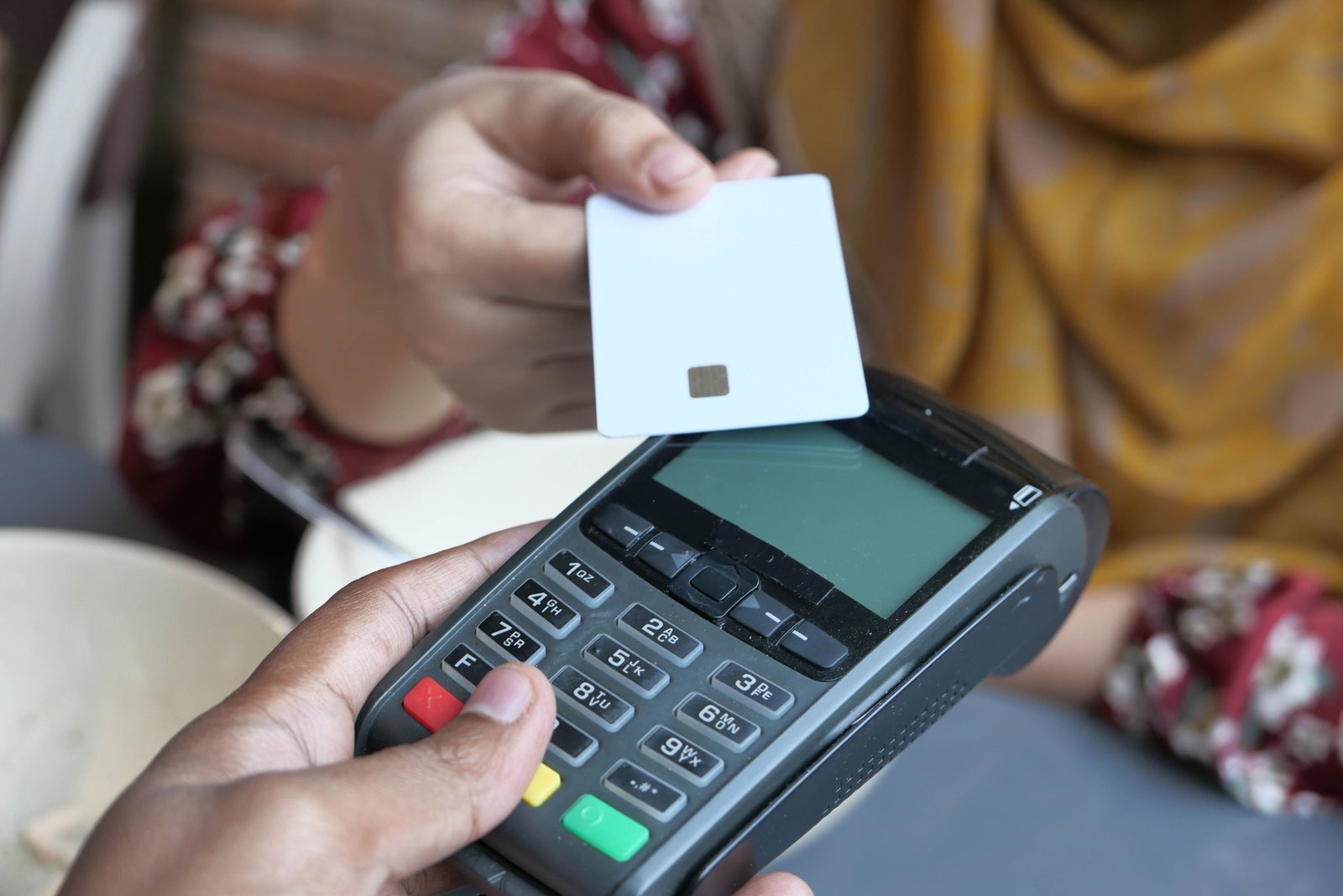
Card payments have always come with an MDR. We just never had a WhatsApp forward about it. Photo: Towfiqu barbhuiya on Pexels, Pexels Licence.
- Card machines have always carried an MDR. According to the same FAQs, credit card MDRs typically run from 1.5% to 2.5%, and debit card MDRs are capped at up to 0.90%. That's several times the new UPI rate.
- RuPay credit cards on UPI already come with a fee. When you scan a shop's QR code and pay with your RuPay credit card, credit card rules apply, not UPI rules. Since 2022, NPCI has exempted small merchants from any MDR on these payments up to ₹2,000. Above ₹2,000, or if the shop isn't a small merchant, the merchant pays a card-style MDR. The government's own FAQ puts credit card MDRs typically at 1.5% to 2.5%, and Paytm's published business price list, for example, shows 1.99% (plus GST) on UPI credit card payments above ₹2,000. The best part? Apps like Paytm simply deduct it from the merchant's settlement, and that includes payments through the QR stand and the soundbox at the counter. Most shopkeepers never notice. The soundbox says "payment received", the screen says "UPI", and everyone assumes it was free. Surprise: it wasn't.
- Some merchants pass card fees on, and some don't. You've seen the "2% extra on card" sign at the electronics shop. You've also seen shops that take the hit and say nothing. There has never been one rule for how merchants behave. There has only been one rule for what they're supposed to do.
So when people say UPI is "becoming like cards", the gentle correction is that it's becoming a little bit like cards, at a fraction of the price.
Is it an additional charge? Yes. Let's not pretend otherwise.
I'm not going to dress this up. For a merchant who used to pay ₹0 on a ₹5,000 UPI sale and will now pay ₹20, this is an additional cost. It's small, but it's not zero, and margins in Indian retail are rarely generous.
Why now? Because servers don't run on goodwill
UPI handled 2,451 crore transactions worth ₹29.9 lakh crore in August 2026 alone. Something that big needs servers, bandwidth, fraud monitoring, cybersecurity and customer support. The official FAQs quote industry estimates of around ₹20,000 crore a year to keep UPI running. Until now, much of that has been covered by government incentive schemes, which were always meant as a bridge, not a permanent salary.
A quick clarification, because the internet keeps getting this wrong: NPCI does not pocket the MDR. The merchant pays it to its acquiring bank, and it's shared among the players in the chain: the customer's bank (which gets the largest share), the merchant's bank, the payment app and other service providers. NPCI runs the network and, through the steering committee, sets the rules. The money goes to the banks and fintechs that move your rupee from point A to point B.
Will it add to fee income in the sector and, technically, nudge the services numbers in our GDP? Probably, in a modest way. But a charge that moves money from shopkeepers to banks isn't new economic activity. It's the same pie, cut differently.
The great "it's on every UPI payment" myth
To be clear one more time:
- Not on your payments to friends and family.
- Not on payments up to ₹2,000.
- Not on small P2PM merchants.
- Not on you, the customer, at all.
It's a merchant-side charge, above a threshold, on merchants who aren't in the small-merchant category.
The ₹1,999 workaround (yes, we all thought of it)
Here is where Indian ingenuity enters the chat. If the fee applies only above ₹2,000 per transaction, what stops a ₹3,800 bill from becoming two payments of ₹1,900?
Technically, nothing in the rule itself. A per-transaction threshold almost invites this, and you can already picture the counter conversation: "Sir, two times scan kar dijiye, please." The merchant saves ₹15, the customer spends an extra 30 seconds, and the system that wanted the fee gets nothing. It's a small loophole, but over billions of transactions, small loopholes add up.
Now the part that actually worries me: paying to pay your payment
Step back and look at the big picture. For a decade, India has worked hard to get people off cash: demonetisation, Jan Dhan accounts, Aadhaar-linked banking, and UPI QR codes on every cart, kiosk and temple donation box. Digital India's whole pitch to the small shopkeeper was simple: digital is faster, safer and free.
Now the message is getting muddier. You pay for the goods, then the shop pays for receiving your payment, and suddenly everyone is paying to pay their payment. Even if the rule says "merchant only, above ₹2,000", what reaches the street is "UPI has charges now".
And the easiest way to dodge a digital charge is the oldest one: "Cash dena, bhaiya."
Cash isn't free either. It has to be counted, carried, guarded and deposited, and it can go missing. But those costs are invisible, and a 0.4% deduction on a settlement report is very visible. If payment networks give people even a small reason to go back to cash, we risk undoing some of the hard-won progress of the last decade. That progress includes a cleaner money trail, a wider tax base and credit histories for small businesses that never had one. Losing those would cost the country far more than whatever the MDR brings in.
To be fair, the rule-makers clearly know this. The exemptions, the ₹2,000 threshold, the flat fees for essentials and the proposed fund for small merchants are all there to soften the blow. The question is whether the perception will be as carefully designed as the policy.
So where does that leave us?
Here's my take:
- Customers: You aren't being charged for UPI. Don't let a forward convince you otherwise, and don't accept a "UPI charge" added to your bill.
- Merchants: Check how your account is classified, read your settlement reports, and know what you're actually paying today, including on RuPay credit card payments you may have assumed were free.
- Everyone: UPI does cost money to run, and someone was always going to pay for it. The real debate is about who pays, how visibly, and whether it nudges India back towards the cash drawer.
Which brings me to you.
If your favourite shop started saying "Cash please, UPI has charges now", would you go back to cash to keep the peace, or would you split the bill into ₹1,999 pieces and keep scanning?
This article is for general information only. It isn't financial, legal or investment advice. The figures are based on NPCI and Department of Financial Services FAQs dated 15 September 2026 and on news reports up to 13 October 2026. The exact start date is yet to be notified.